
Orbital welding is a specialised welding process designed to deliver precise, consistent, and clean welds. Used across a wide variety of industries, including pharmaceutical manufacturing, aerospace, food production, and energy, it has become the preferred solution when weld quality and consistency cannot be compromised.
But what exactly is orbital welding, and why is it so important in modern engineering?
In this article, we’ll explain the process in simple terms, explore where orbital welding is used, and outline why so many businesses are adopting this technique to ensure consistent weld quality. Whether you’re new to the concept or considering investing in orbital welding equipment, this practical guide will help you understand the essentials.
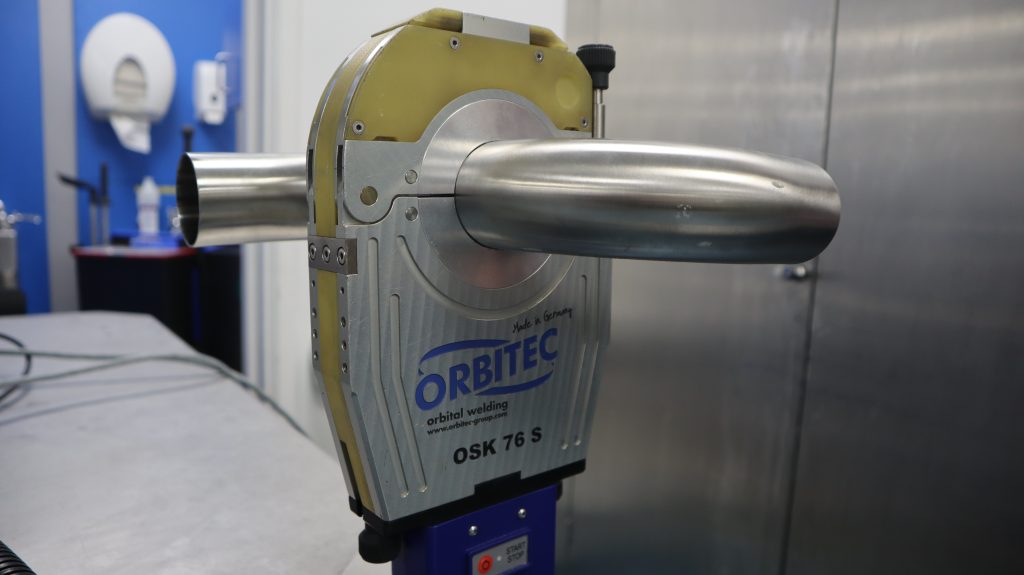
Orbital welding is an automated welding method where a welding torch rotates 360 degrees around a stationary workpiece, typically a pipe or tube. It is used with the TIG (Tungsten Inert Gas) welding process because TIG produces clean, precise welds with excellent control.
Unlike manual welding, orbital welding is controlled by a programmable power supply. This means the welding parameters, such as speed, current, arc length and shielding gas flow, can be set before the weld begins, ensuring repeatable results with every cycle.
In simple terms, orbital welding is automatic TIG welding for tube and pipe systems. It produces accurate, repeatable and high quality welds.
Orbital welding first appeared in the aerospace industry in the 1960s when engineers needed a way to weld thin stainless steel tubing for fuel and hydraulic systems within exact parameters. Manual welding wasn’t accurate or consistent enough for these critical applications.
The success of orbital welding in aerospace soon led to its adoption in industries where weld integrity and cleanliness are essential. Today, it is widely used wherever contamination, leaks, system failure or weld fatigue must be prevented.
Orbital welding, while based on advanced technology, is a straightforward process. Before welding starts, the ends of the pipe or tube are cut square and prepared, as proper preparation is crucial for achieving clean welds. The materials to be welded are then securely clamped in the weld head, which maintains their alignment throughout the welding cycle.
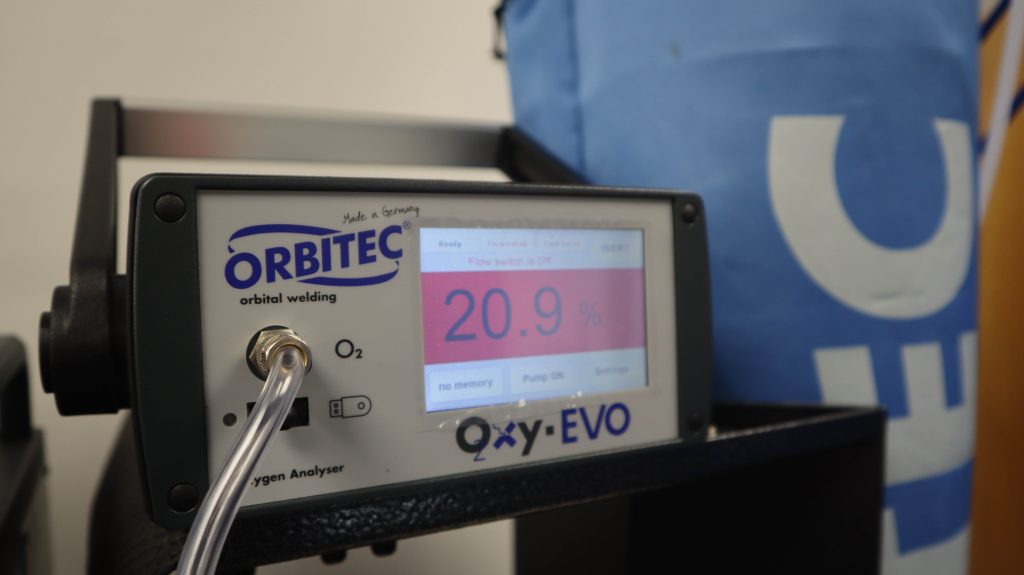
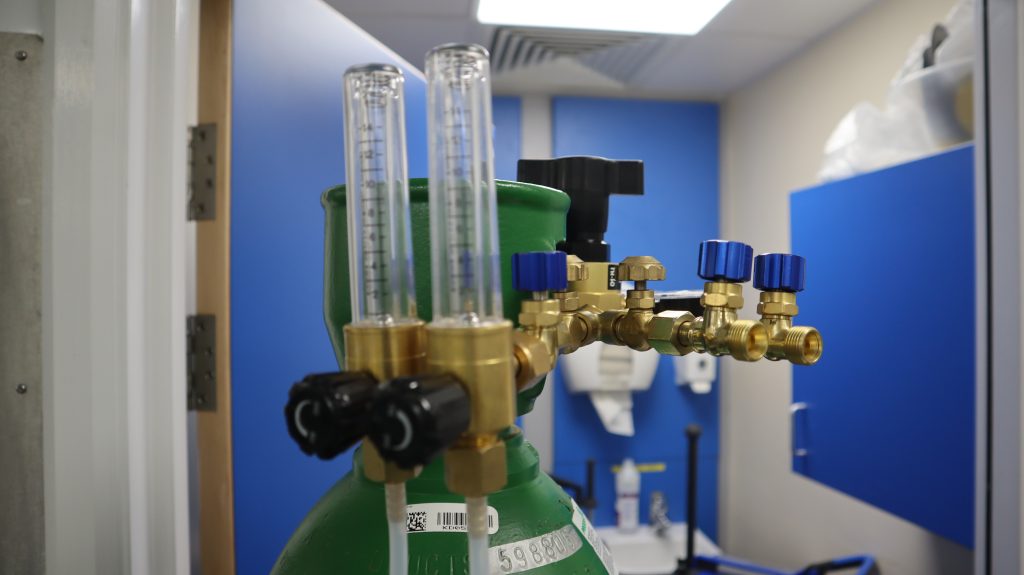
Next, a welding program is selected on the power supply. This program automatically controls the welding process. Shielding gas (such as Argon or Helium) is introduced to protect the weld from oxidation. When working with stainless steel or titanium, internal purging is also used to protect the inside surface of the weld.
Once everything is set, the automated weld head rotates around the joint and produces a complete 360-degree weld. The result is a high-quality, repeatable weld with no variation between operators or shifts.
The main driver for choosing orbital welding is the ability to reliably deliver consistent weld quality and process efficiency. Every weld is produced under controlled conditions, eliminating the inconsistencies typical in manual welding. The process also produces smooth internal weld beads, which are essential for applications involving sterile, high-purity or high-pressure systems.
Orbital welding systems store weld data, making it easy to meet industry quality and traceability requirements, for businesses working to specific industry standards such as ASME, EN or AWS. Orbital welding supports compliance and quality assurance.
Orbital welding is commonly used in:
In any of these sectors, consistent welding is essential for operational safety and reliability.
An orbital welding system normally includes three key components. The power supply that controls the welding parameters and allows the operator to store or load welding programs. The weld head, which clamps around the pipe or tube and rotates the electrode around the joint.
Additional tools such as tube cutters, facing machines and purging systems are also essential to prepare the material correctly and maintain weld quality.
If your business carries out high-spec tube or pipe welding, the short answer is yes. Orbital welding reduces weld rework, lowers the risk of defects, speeds up production and delivers consistent results. It also helps businesses overcome skill shortages by reducing reliance on highly experienced welders.
Many of Orbitec’s customers start with orbital welding to solve a particular challenge, and soon apply it to other areas of production because of the long-term reliability and cost efficiency it brings.
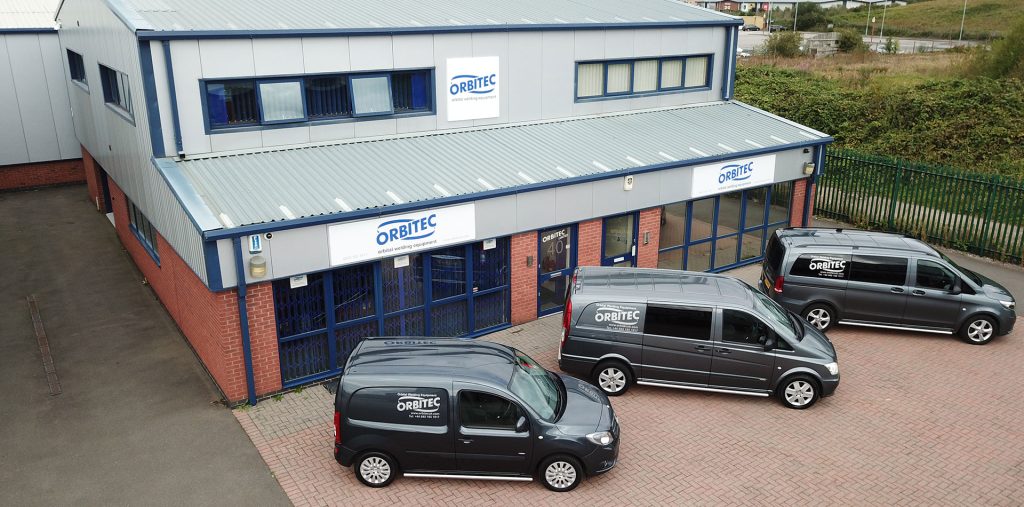
Orbitec Limited supplies complete orbital welding solutions across the United Kingdom and Ireland. We provide orbital welding machines, closed and open weld heads, purging equipment, tube cutting and facing tools, weld inspection systems, servicing, spares and technical support. We also offer training to help new operators become confident with orbital welding equipment quickly.
Based in Derby, we support manufacturers who require high-quality welding performance and dependable equipment backed by experienced technical support.
For more information about our products and services or to discuss your specific requirements, please contact us at:
Phone: +44 1332 296193
Email: info@orbitecuk.com
Alternatively, you can visit our showroom at any time and try our orbital welding solutions for yourself.
Orbitec, Unit 40, Royal Scot Road, Pride Park, Derby, DE24 8AJ